Kachofugetsu
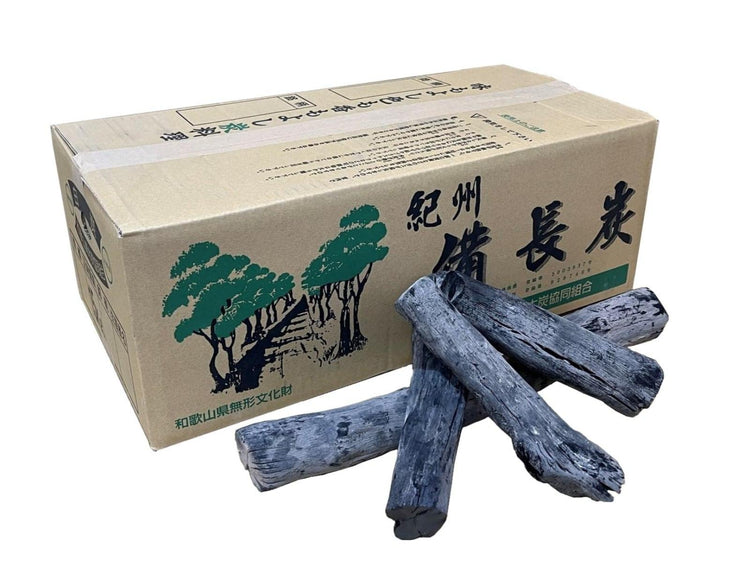
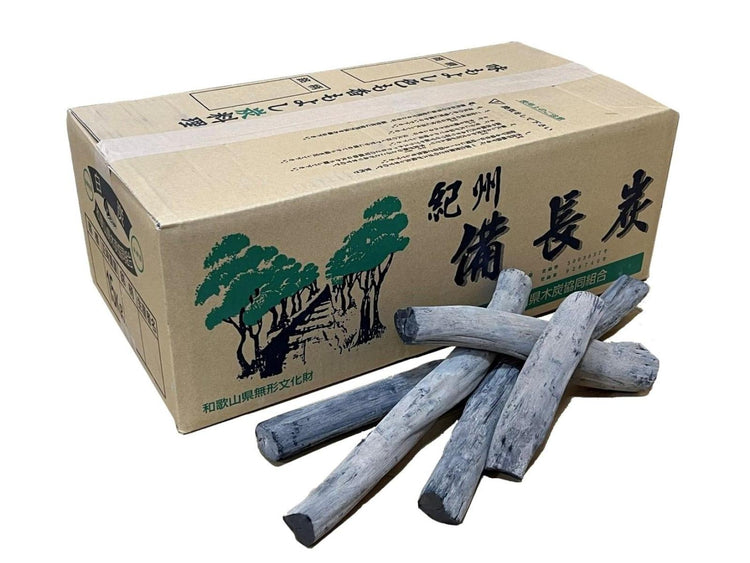
Kishu Binchotan Charcoal / Grilling Grade / Ubame Oak / Made in Japan
- Regular price
- ¥36,500
- Sale price
- ¥36,500
- Regular price
-
A separate shipping fee is required.
Couldn't load pickup availability
Authentic Kishu Binchotan from Wakayama
Kishu Binchotan is a traditional Japanese white charcoal used in Japanese grilling. Produced in Wakayama, Japan, this dense hardwood charcoal is prized by professional yakitori chefs for its exceptional heat stability, long burn time, and even heat.
Unlike standard charcoal, once lit, Binchotan burns with steady heat for a long time. This allows the natural flavors of ingredients to take center stage—an essential element in the craft of Yakitori, Kushiyaki, and other forms of Japanese charcoal grilling.
When paired with a Konro grill, Kishu Binchotan creates the intense radiant heat required to achieve the perfect balance of crisp exterior and juicy interior that defines authentic Japanese grilling.
Why Kishu Binchotan?
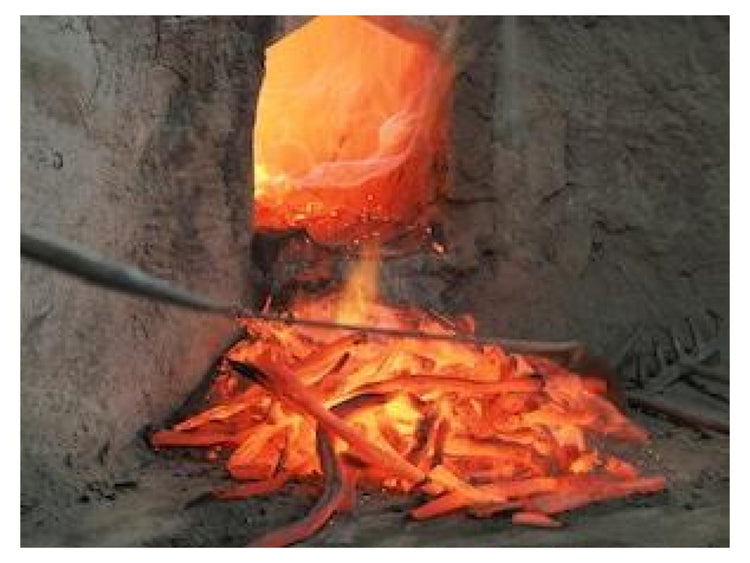
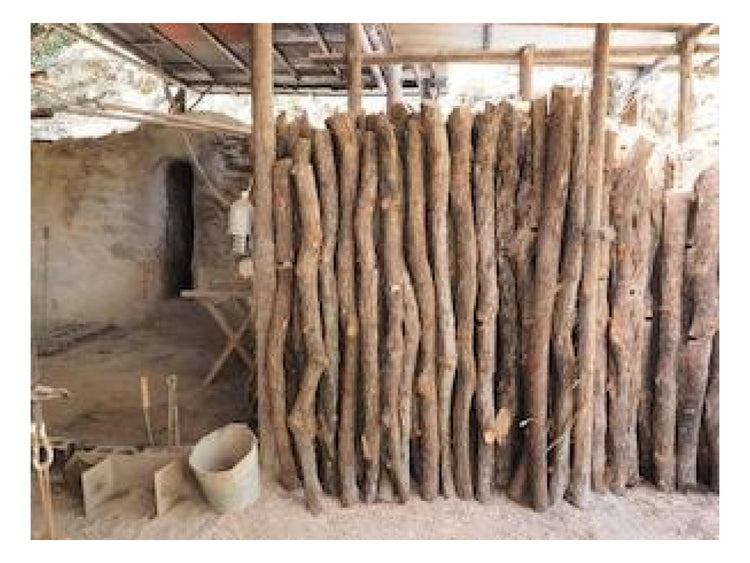
Kishu binchotan is a hard white charcoal made in Wakayama Prefecture from ubame oak and related oaks. The wood is carbonized slowly in a kiln, refined at the end at a temperature the prefecture describes as over 1,000°C, then put out under a covering of ash and soil. The result is so hard that two pieces ring with a clear, metallic sound when tapped together.
The traditional method of making it is designated an Intangible Folk Cultural Property by Wakayama Prefecture (1974), and "Kishu Binchotan" is a regional collective trademark held by the Wakayama Prefecture Charcoal Cooperative. Japan's Ministry of Agriculture, Forestry and Fisheries describes it as long-burning, with stable heat that cooks evenly, and loved by yakitori and eel chefs. It is slow to light, so allow time to get it going (see our guide).
Key Features
Authentic Kishu Binchotan from Wakayama
Produced in Wakayama Prefecture, the traditional home of Kishu Binchotan. This charcoal is made from Ubame Oak (Ubamegashi), a dense hardwood known for producing extremely high-quality Binchotan.
High-Density Ubame Oak Charcoal
Ubame Oak creates an exceptionally dense charcoal structure. This allows the charcoal to burn longer and maintain stable high heat, making it ideal for professional grilling environments.
Steady, Even Heat
Once fully lit, it gives steady heat that cooks evenly, letting the natural flavors of meat, seafood and vegetables come through—an essential quality for Yakitori and Kushiyaki.
Long-Lasting and Stable Heat
Due to its density, Kishu Binchotan burns for a long time once lit, while maintaining a steady temperature. This makes it particularly suitable for extended grilling sessions and professional kitchen use.
Multiple Charcoal Shapes for Different Applications
This product is available in several traditional Binchotan shapes, each suited to different grilling styles and heat management preferences.
-
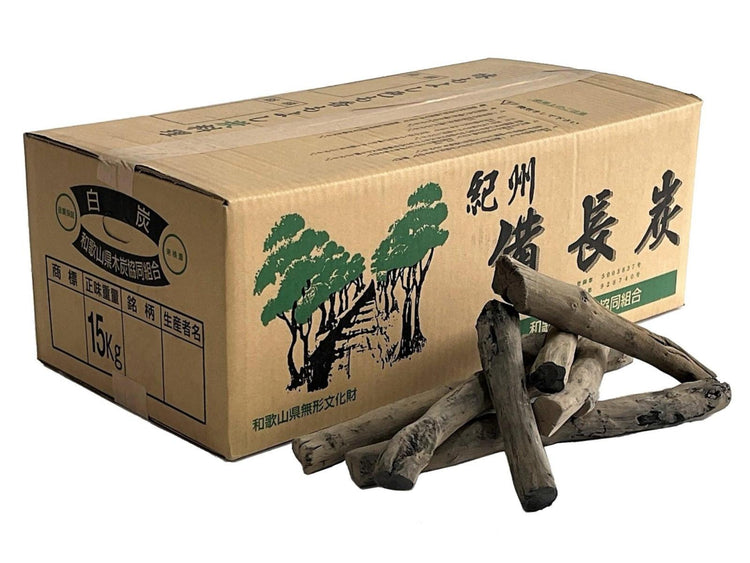
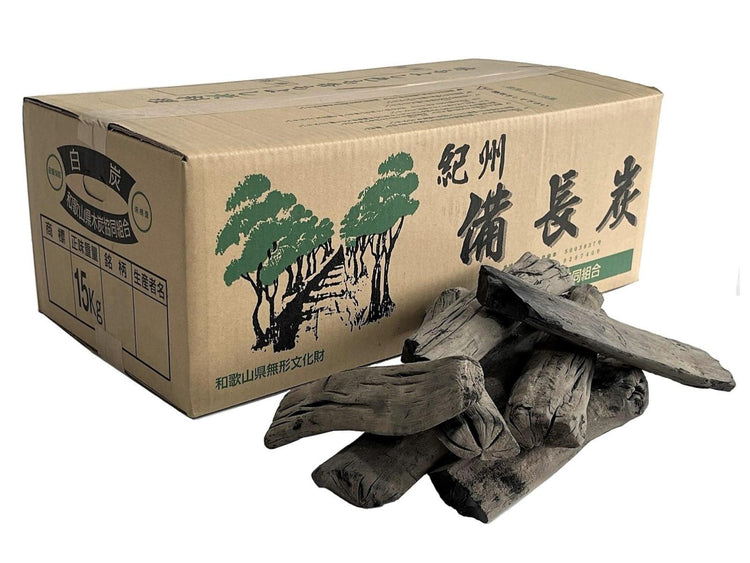
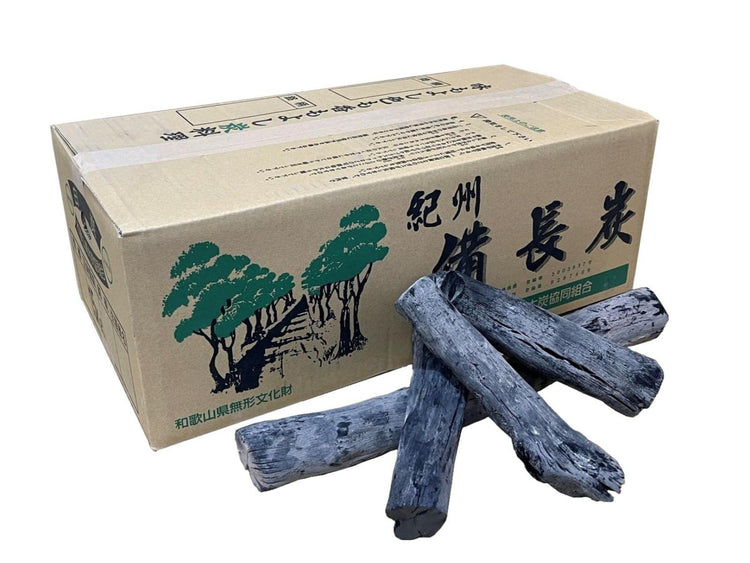
Jokomaru (Premium Fine Round) – High-grade finely shaped round charcoal selected for its uniformity and quality.
-
Komaru (Fine Round) – Thin round charcoal that is easy to handle and suitable for a wide range of grilling uses.
-
Hanmaru (Half-Split Logs) – Thick logs split in half, providing a stable and long-lasting burn.
-
Chumaru (Thick Round) – Large round charcoal designed for sustained high heat over longer cooking sessions.
Specifications
Brand: Unbranded
Type: Kishu Binchotan Charcoal for Grilling
Origin: Wakayama, Japan
Wood Type: Ubame Oak (Ubamegashi)
Available Styles:
Jokomaru / Komaru / Hanmaru / Chumaru
Available Weights:
1kg
1.5kg Short (Approx. 20cm)
15kg
15kg Short (Approx. 20cm)
Includes:
Kishu Binchotan charcoal only
For the Serious Charcoal Griller
For chefs and grilling enthusiasts seeking to recreate the authentic experience of Japanese Yakitori and Kushiyaki, Kishu Binchotan remains the charcoal of choice. Its steady heat and long-lasting performance make it an essential component of traditional Japanese charcoal cooking.
Bring the precision and intensity of professional Japanese grilling to your own Konro setup with genuine Kishu Binchotan.
How to Use
Binchotan takes longer to light than ordinary charcoal. Allow about 30 to 60 minutes from lighting to the start of cooking. For lighting times by shape, how to prevent popping, how to store it, and how to put it out and reuse it, see our guide: How to Light, Store, Put Out and Reuse Kishu Binchotan.
At home, use outdoors only. Burning charcoal produces carbon monoxide.
Frequently Asked Questions
Which shape should I choose?
For yakitori, Komaru (thin round) or Jokomaru (premium round): the heat is steady and the pieces are easy to line up. For yakiniku or a small shichirin, Komaru or Hanmaru (half-split): they are easy to arrange to fit the grill. For barbecue and long cooking sessions, Jokomaru or Chumaru (thick round). Hanmaru tends to burn gently and can leave unburned pieces.
How much charcoal should I use?
As a starting amount: a small shichirin (1–2 people) about 300–500 g; a standard shichirin or tabletop grill (2–4 people) about 500 g–1 kg; a barbecue grill (4–6 people) about 1.5–3 kg. Adjust for the size of your grill, what you cook, how long you cook, and the wind. These are general guidelines only.
How long does it take to light, and how long does it burn?
Estimated lighting times: Komaru about 15–25 min, Jokomaru about 20–30 min, Hanmaru about 20–35 min, Chumaru about 25–40 min. Allow 30–60 minutes from lighting before you start cooking. Preheat slowly on low heat and keep your face away while it lights — pieces can crack and throw hot fragments. Never place a chimney starter on a portable gas stove: the canister can overheat and explode.
Under good conditions binchotan can burn for several hours, but the time it stays hot enough for cooking is shorter, and it varies with shape, setup and airflow, so we don't state a fixed burn time. Thicker shapes (Jokomaru, Chumaru) suit longer cooking. All times are general guidelines, not guaranteed values.
Can I use it indoors?
Not at home. Burning charcoal produces carbon monoxide. At home, use it outdoors only — never indoors, in a garage, tent or vehicle, or in any poorly ventilated space. In a restaurant, use it only with a charcoal exhaust system approved by your local fire authority.
Can I reuse it?
Yes. Put it out in a charcoal extinguisher pot, and you can light the pieces again while they are still a good size. The pot gets very hot: keep it on a non-flammable surface and don't open or move it until it is completely cool. Pieces get smaller each time, so there is no fixed number of uses. Don't reuse pieces that have crumbled or are soaked with grease. We don't recommend using charcoal that was put out with water as fuel, even after drying — it may crack and burst when heated again.
Will I have to pay import duties?
Import duties, taxes and customs fees are not included in the item price or shipping charge, and the recipient pays them — usually to the carrier before or at delivery. The amount is decided by customs in your country. Please see Import duties/other fees and, for the United States, Import Duties for the United States.